FROM GRANDMOTHERS TO GRANDKIDS: WHAT WE CAREFULLY PASS DOWN FROM GENERATION TO GENERATION
DOI:
https://doi.org/10.5281/zenodo.23286971Keywords:
family traditions, intergenerational transmission, moral values, family upbringing, cultural heritage, civic identity, autoethnography, family memory, socialization, value orientationsAbstract
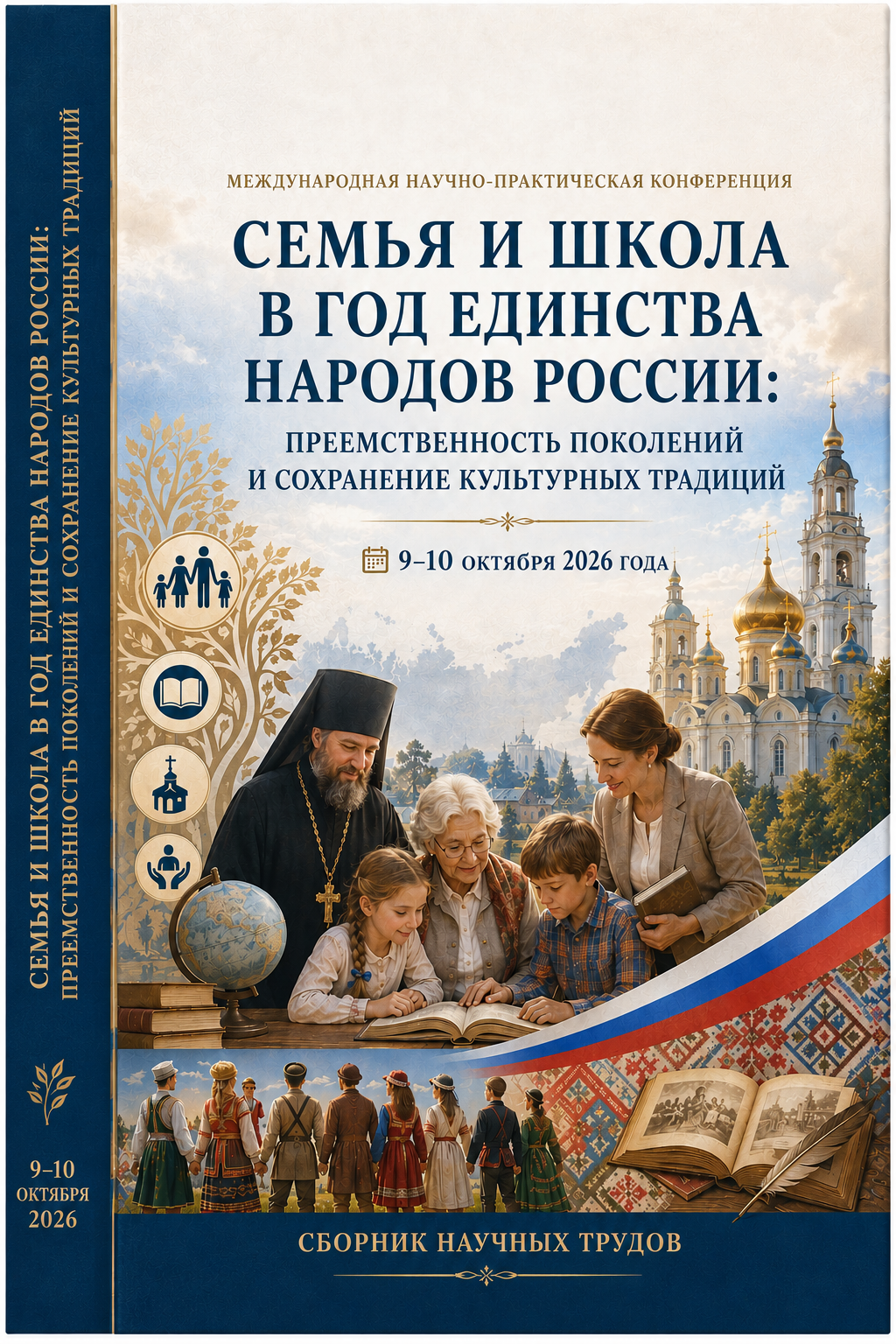
The article addresses the intergenerational transmission of family traditions and their role in shaping the moral orientations of the individual. The author proceeds from the premise that, although the family as an institution of socialisation has been studied extensively, it remains unclear what enables a tradition to survive the loss of its bearer and which practices ensure its reproduction. The study aims to identify how family traditions inherited from the older generation secure the transmission of value orientations and strengthen intra-family ties. The research is carried out within the qualitative paradigm in the genre of autoethnography, whereby the author acts simultaneously as a participant in the processes under study and as an analyst of her own experience. The material comprises four traditions steadily reproduced in the author’s family across several generations and selected according to the criteria of regularity, participation of different generations and survival after the founder’s death: making apple pancakes, evening stories told by elders, decorating the New Year tree with candies, and autumn mushroom picking. The methods employed are reflective description of family practices and thematic reconstruction, which distinguishes the external form of each tradition from its value content. All four practices are shown to share two characteristics – regularity of reproduction tied to a particular time of day, holiday or season, and emotional intensity ensured by the participants’ deliberate investment of feeling; the combination of these conditions enables the traditions to persist after the founder’s loss. The transmission of traditions is shown to presuppose not the copying of actions but their endowment with personal meanings, while the traditions themselves convey kindness, care, respect for family history and a sense of belonging to a common whole. Limitations are acknowledged: the material is confined to one family’s experience, no statistical processing was carried out, and the conclusions are preliminary. The practical significance lies in the possible use of the materials in family studies lessons, homeroom hours and counselling work with families.
Downloads
Published
Issue
Section
License
Copyright (c) 2026 Ильмукова Мария Алексеевна (Автор)

This work is licensed under a Creative Commons Attribution-NonCommercial 4.0 International License.