FORMATION OF ALL-RUSSIAN CIVIC IDENTITY OF SECONDARY VOCATIONAL EDUCATION STUDENTS BY MEANS OF LITERATURE: FROM FAMILY CHRONICLE TO CULTURAL MAP OF THE REGION
DOI:
https://doi.org/10.5281/zenodo.23285524Keywords:
all-Russian civic identity, secondary vocational education, teaching literature, family chronicle, cultural map of the region, literary local history, project activity, patriotic value orientations, intergenerational continuity, pedagogical conditions, axiological approach, culturological approachAbstract
The article addresses the problem of the gap between the declarative tasks of civic education in the system of secondary vocational education and real educational results. The aim of the work is to substantiate and develop a model for the formation of all-Russian civic identity of secondary vocational education students by means of literature, built in the logic of transition from family chronicle to the cultural map of the region. The study is designed as a theoretical and methodological one with elements of pedagogical modeling: based on the analysis of eleven recent publications, normative documents and teaching practice, a three-stage model has been constructed, including the stages “My family in the history of the country”, “Literary map of my region” and “From family chronicle to the cultural map of the region”. A typology of project tasks has been developed, differing in the level of cognitive activity (reproductive, productive, creative). It is shown that the combination of family chronicle and cultural map of the region in a single project activity in literature allows for the purposeful formation of the cognitive, emotional and behavioral components of civic identity. Five pedagogical conditions for the effectiveness of the model are substantiated: systematicity, dialogicity, connection with professional activity, visualization and special training of the teacher. Examples of tasks for each stage are provided. The scientific novelty lies in the fact that for the first time a holistic model has been proposed that integrates family chronicle and cultural map of the region into the content of the academic subject “Literature” in secondary vocational education, a stage-by-stage logic of work has been developed, and conditions for its effectiveness have been defined. The research materials are addressed to teachers of literature in secondary vocational education, methodologists, developers of teaching aids, and organizers of professional development.
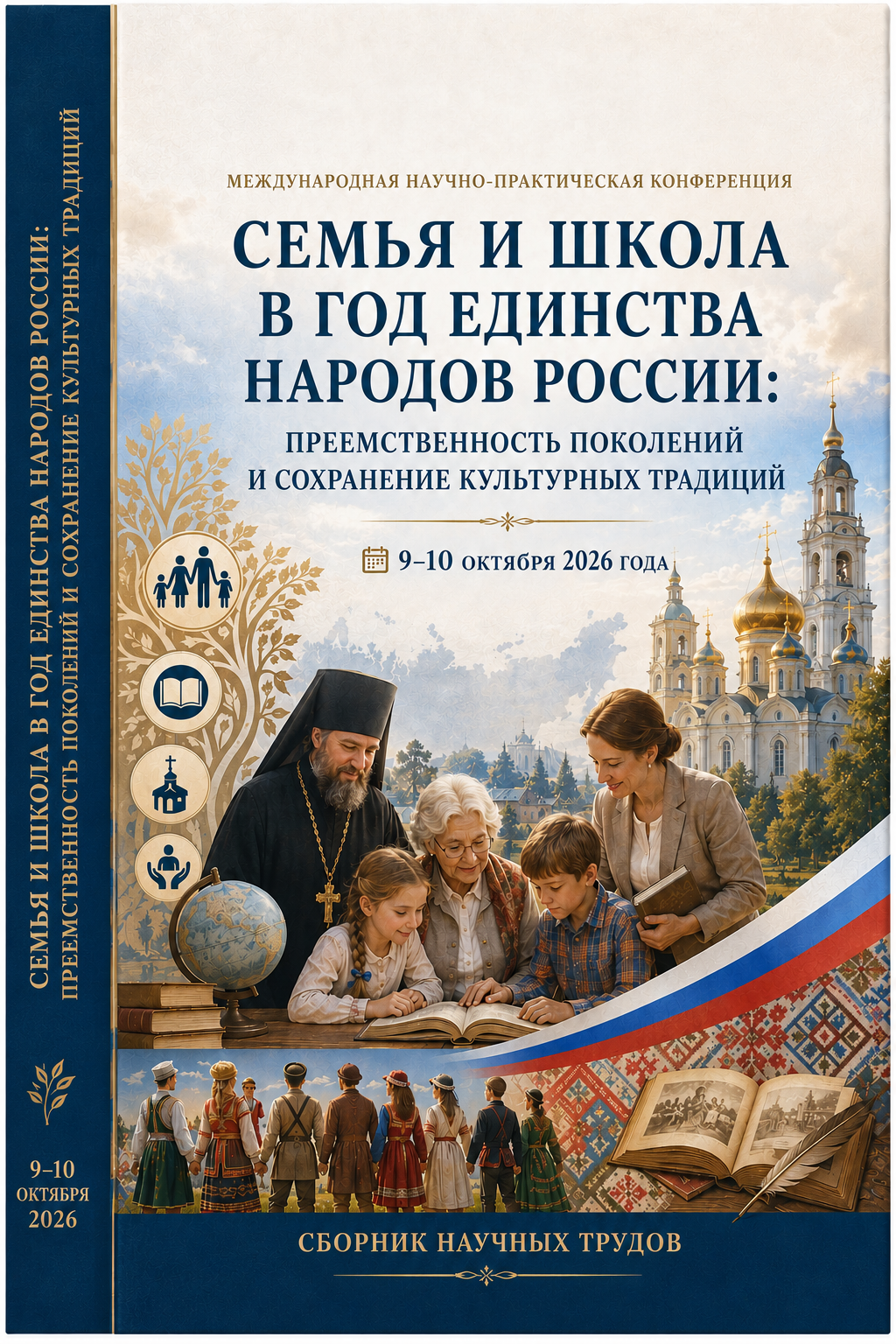
Downloads
Published
Issue
Section
License
Copyright (c) 2026 Галимарданова Наиля Мухаматкасимовна (Автор)

This work is licensed under a Creative Commons Attribution-NonCommercial 4.0 International License.